
 how-to
Is Inventory Matching Safe for Resellers?
Table of Contents
- What Inventory Matching Means and How It Works
- How to Track Inventory for Reselling Across Matched Sets
- Liquidation Inventory Sourcing: Finding Safe Matching Partners
- Evaluating Incomplete Product Sets for Resale
- Liquidation Marketplace Safety: Fraud Risks and How to Avoid Them
- Your Due-Diligence Checklist Before Matching Inventory
- Conclusion: Making Inventory Matching Work for Your Business
- Frequently Asked Questions
Last Updated: October 18, 2026
What Inventory Matching Means and How It Works
Inventory matching safe practices connect resellers who have partial product sets with other resellers who have the missing pieces. Instead of sitting on incomplete inventory that won't sell, you find a partner who holds the exact box or component you need, complete the set together, and both profit from the sale.
This solves a real problem in liquidation reselling. You buy a pallet or lot, but it's incomplete. You have boxes 1, 3, and 5 of a 6-piece set. The incomplete set is unsellable on Amazon or eBay. Most resellers either warehouse it, donate it, or scrap it.
The mechanics are straightforward:
- You list what you have and what you're missing
- Other resellers see your need and offer their extras
- You negotiate a price or trade
- One person ships their pieces to complete the set
- The completed set sells on your primary marketplace
At Find The Other Box, this process is simplified through a dedicated matching engine. You post once and connect with resellers actively looking to move the exact inventory you need.
How to Track Inventory for Reselling Across Matched Sets
Tracking partial inventory across multiple sets requires a system. Without one, you'll lose track of what you have and what's missing.
Start with a simple spreadsheet or inventory management tool. Record:
- Product name and SKU
- Set number (e.g., "6-piece tool set")
- Which boxes or pieces you have
- Which pieces are missing
- Quantity on hand
- Date received
- Current storage location
Update it weekly. The goal is knowing at a glance what's sitting in your warehouse and what would complete it.
Many resellers use barcodes or QR codes on partial sets. Print a label with the set name and missing pieces. Scan it when you receive new inventory or when you find a match.
For resellers managing hundreds of partial sets, consider inventory management software that tracks by lot or set.
Document which marketplace each set is listed on. If you have box 1-4 of a set on Amazon and find boxes 5-6 on eBay, you need to know that before you buy.
Liquidation Inventory Sourcing: Finding Safe Matching Partners
Sourcing incomplete inventory is common in liquidation. Pallets are broken up. Overstock shipments arrive damaged. Customer returns come in mixed lots. You end up with partial sets regularly.
Most competitors stop at "buy from licensed liquidators." That is necessary but not sufficient for inventory matching, because your matching partner is usually another reseller, not a liquidator.
Use a two-layer sourcing model:
Layer 1, Source the partial set from a traceable channel. Buy from licensed liquidators, authorized resellers, or certified overstock brokers. Record the original seller's name, invoice number, and lot description. This matters for high-value items where provenance affects resale and for any item where you may later need to prove ownership. Avoid sourcing from unknown sellers on unmoderated platforms when the item is high-value or regulated; a partial set with no documentation is harder to complete because you cannot verify what the missing pieces should look like.
Layer 2, Vet the matching partner separately. A matching partner is not a sourcing channel; they are a transaction counterparty. Before you agree to a match, confirm four things:
- Identity and history. Ask for their marketplace storefront or seller profile and check recent feedback, not just the lifetime score. A seller with 500+ transactions and 98% positive feedback is lower risk than a new seller with 3 sales, but recent complaints about condition or shipping matter more than old ones.
- Proof of the specific pieces. Request photos of the actual boxes or components they hold, including part numbers, box numbers, and any damage. Stock photos or catalog images do not prove possession.
- Provenance for the matched pieces. Ask where they sourced the pieces and whether they have an invoice or lot record. For branded goods, this is also your first counterfeit screen.
- Transaction terms in writing. Agree on price, who ships first, packaging method, tracking, and the dispute process before anyone pays.
A practical pattern many resellers use is to start with a small test match before a large one. Complete one low-value set together, confirm the pieces arrive as described, and then scale to higher-value inventory.
For resellers using Find The Other Box, matching happens within a community of users solving the same partial-inventory problem, and the platform helps connect users. That does not remove your responsibility to verify the specific pieces and the specific counterparty.
Evaluating Incomplete Product Sets for Resale
Before you buy an incomplete set, ask: Can this actually sell if I complete it?
Check resale value first. Look up the complete set on Amazon, eBay, and other marketplaces. What's the current price? What's the sales velocity?
Assess the condition of what you have. Damaged boxes, missing manuals, or worn items reduce resale value.
Verify the set is real and not counterfeit. Check product codes, logos, and packaging details against official product pages. Counterfeit items won't sell, even if complete.
Look at demand trends. Is this product type selling right now, or is it fading? Seasonal items (holiday decorations, sports gear) may be worth sourcing only during their season.
Calculate the true cost of completion. Factor in:
- What you paid for the partial set
- What matching pieces will cost to source
- Shipping and handling for the completed set
- Marketplace fees and commission
- Your time coordinating the match
If the math doesn't work, pass. There's always another set.
Liquidation Marketplace Safety: Fraud Risks and How to Avoid Them
Fraud happens on liquidation marketplaces. Sellers misrepresent inventory. Buyers claim items never arrived. Payments disappear. You need safeguards.
The biggest fraud risk is item condition.
Payment fraud is real. Never send money via wire transfer or untraceable payment methods. Use platforms with buyer protection.
Shipping fraud happens when a seller takes payment but never ships. Use tracking numbers. Require signature confirmation for high-value items.
Verify seller credentials. Check their feedback score on the platform. Read recent reviews.
For reseller-to-reseller transactions on matching platforms, use escrow or platform-mediated payment when possible. Find The Other Box facilitates these connections.
Never assume good faith. Assume incompetence or dishonesty until proven otherwise. Require proof of what you're buying. Get it in writing.
Your Due-Diligence Checklist Before Matching Inventory
Before you commit to matching inventory with another reseller, run through this checklist. It is organized around the five risk areas that actually determine whether a match is safe: the partner, the item, the match itself, the money, and the paperwork.
1. Verify the partner
- Check their marketplace storefront and recent feedback, not only the lifetime rating
- Confirm they are an active reseller with a transaction history, not a one-time seller
- Ask for a reference from a previous matching transaction if the value is high
- Look for unresolved disputes or complaints about condition or shipping
2. Verify the item and its provenance
- Request photos of the actual pieces from multiple angles in clear lighting
- Confirm box numbers, part numbers, model numbers, and serial numbers match your partial set
- Ask directly about defects, damage, missing manuals, and missing accessories
- Ask where they sourced the pieces and whether they can provide an invoice or lot record
- Screen for counterfeits: compare logos, packaging, and product codes against the official product page
3. Confirm the match is complete
- Verify they hold ALL the missing pieces, not just some
- Check that the condition of their pieces is comparable to yours
- Confirm the combined set will be sellable on your target marketplace under that platform's condition rules
4. Protect the payment
- Agree on price and terms in writing before paying
- Use a payment method with buyer protection or platform-mediated escrow; avoid wire transfers and untraceable methods
- Decide who ships first, or use escrow so neither side ships blind
- Set a shipment and delivery timeline with consequences for missed deadlines
5. Document the transaction
- Keep screenshots of the listing, messages, and payment receipt
- Require tracking numbers and signature confirmation for high-value shipments
- Photograph the pieces and packaging before you ship
- Save all records until the completed set sells and any return window closes
6. Check compliance before you buy
- Confirm the item is not restricted or prohibited on your target marketplace
- Confirm you can document ownership if the platform asks
- Check whether the sale creates tax or recordkeeping obligations in your jurisdiction
- Review the matching service's terms, fees, and dispute process so you know your recourse before a problem occurs
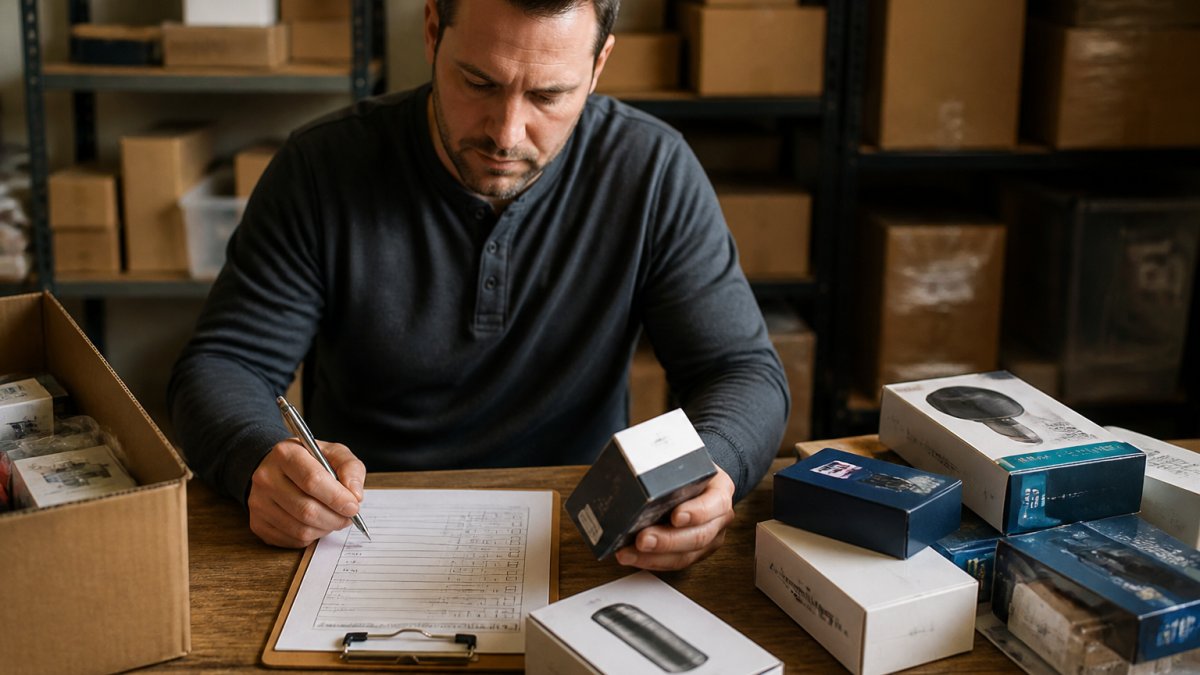
This checklist takes about 15 minutes for a low-value set and longer for high-value inventory. The point is not bureaucracy; it is to force the four questions that prevent most losses: Is this person real, is this item what they say it is, is the payment recoverable, and can I prove what happened if it goes wrong?
Conclusion: Making Inventory Matching Work for Your Business
Is inventory matching safe for resellers? Yes, if you follow due diligence. The risk isn't the process itself. The risk is rushing.
Incomplete inventory sitting in your warehouse costs money. Storage space is expensive. Capital tied up in unsellable sets is capital you can't reinvest. Inventory matching gives you a way to recover that investment.
The key is choosing the right partner and verifying the match before you commit. Use platforms that connect you with other resellers solving the same problem. Avoid unmoderated channels where you have no recourse if something goes wrong.
Find The Other Box was built by resellers for resellers. The platform connects you with a community of users managing partial inventory, with a matching engine that finds exact fits for your incomplete sets. You turn stranded inventory into profit.
Federal Trade Commission guidance on online marketplace safety
Better Business Bureau tips for safe online transactions
National Retail Federation best practices for reseller inventory management
Frequently Asked Questions
What should resellers check before matching inventory with another seller?
Before matching, verify the seller's marketplace history and ratings, confirm item condition descriptions match photos, check that box numbers or lot identifiers are accurate, and clarify payment and shipping terms in writing. Ask for additional photos if descriptions seem vague. Request proof of item authenticity if you're buying branded goods. Document all communication and agreements before completing any transaction.
How can resellers avoid scams when sourcing liquidation inventory?
Consider using dedicated platforms for reseller-to-reseller transactions. Verify seller credentials and transaction history. Never wire funds to unknown accounts; use platform payment systems when available. Request detailed photos of actual items, not stock photos. Confirm shipping addresses and tracking before sending payment. Start with smaller test purchases to build trust. Trust your instinct if a deal seems too good to be true or communication becomes evasive.
Is inventory matching safe for resellers if I'm working with unknown sellers?
Inventory matching can be safe when you follow verification steps and use trusted platforms. Unknown sellers carry higher risk, but you can reduce it by checking their feedback history, asking detailed questions about item condition and authenticity, requesting multiple photos, and using secure payment methods. Platforms built specifically for resellers can help connect you with other resellers. Start with smaller transactions to assess reliability before committing to larger inventory lots.
How should resellers document an inventory match to protect themselves?
Save all communications with the other seller, including messages about item descriptions, condition, and agreed prices. Take screenshots of product photos and listing details. Keep records of payment receipts and shipping tracking numbers. Create a simple spreadsheet noting the date, seller name, items matched, purchase price, and expected resale value. Document the condition of items when they arrive, including photos if anything differs from the seller's description. This documentation protects you in disputes and helps track inventory turnover accurately.
Start matching for free with Find The Other Box. Connect with resellers who have exactly what you need. Clear warehouse space. Recover your investment. Move inventory that's been sitting dead for months. The matching engine handles the heavy lifting, you just approve the match and ship.