
 ultimate-guide
Reselling Overstock Goods for Profit: 2026 Guide
Table of Contents
- Why Reselling Overstock Goods Still Works in 2026
- Overstock, Shelf Pulls, and Customer Returns: What You're Actually Buying
- Best Liquidation Websites for Beginners: How to Source Overstock and Surplus Stock
- Due Diligence: Manifest vs Unmanifested Loads, Condition Grading, and a Sourcing Checklist
- Liquidation Pallet Profit Margins: Real Numbers, Full Costs, and ROI
- How to Sell Incomplete Liquidation Sets Without Losing Your Margin
- Listing, Channels, and Inventory Operations That Protect Your ROI
- Conclusion
- Frequently Asked Questions
Last Updated: October 16, 2026
Why Reselling Overstock Goods Still Works in 2026
Reselling overstock goods for profit remains one of the few retail models where a small operator can buy low and sell high without manufacturing anything. At Find The Other Box, we work with resellers every day who turn those pallets into steady income.
What has changed is the competition. According to the U.S. Small Business Administration's guidance on buying and reselling inventory, understanding your true costs before you buy is the difference between a profitable pallet and an expensive pile of boxes.
Overstock, Shelf Pulls, and Customer Returns: What You're Actually Buying
Overstock is unsold retail inventory that never left the warehouse or shelf. Shelf pulls are products removed from store shelves, often due to packaging changes or seasonal turnover. Customer returns are items shoppers sent back, and their condition varies wildly.
The three categories carry very different risk:
- Overstock: usually new, boxed, and the safest bet for resale
- Shelf pulls: new but may have damaged packaging or missing tags
- Customer returns: mixed condition, from unopened to broken
Many sellers treat every pallet as if it were overstock, the fastest way to lose money. A customer-returns load priced like new overstock is a trap that only shows up after you have paid freight and opened the boxes.
Best Liquidation Websites for Beginners: How to Source Overstock and Surplus Stock
The best liquidation websites for beginners are the large online marketplaces that sell bulk lots directly to resellers, plus regional liquidators who sell locally. Start with one or two sources and learn how they grade inventory before you scale up.
Sourcing channels generally fall into four groups:
- National online liquidation marketplaces with auction-style bidding
- Regional liquidators selling truckloads and pallets
- Wholesale distributors offering case and pallet pricing
Beginners should favor manifested lots from established sellers over unmanifested "mystery" pallets. The predictability is worth more than the occasional bargain. But choosing a channel is only half the decision.
A Sourcing Due-Diligence Checklist
Use this checklist every time you consider a new seller or lot.
- Verify the seller's identity and history. Look for a business name, physical address, and completed-sales track record. New accounts with no feedback are a risk.
- Request the manifest in spreadsheet form. A spreadsheet lets you sort by retail value, spot duplicate line items, and calculate average item value in minutes.
- Confirm the condition grade and return percentage. Ask explicitly: What percentage is customer returns? What is the return-to-new ratio? Sellers who cannot answer clearly are a red flag.
Manifested vs. Unmanifested: What the Difference Means for Sourcing
A manifested load comes with an item-level list: product names, quantities, and often retail values.
Manifested loads let you calculate expected profit before you buy: sort the manifest, identify high-value items, estimate sell-through, and decide whether the lot works.
For beginners, the rule is simple: buy manifested, buy from sellers with a verifiable history, and estimate the sellable count conservatively.
Where to Start
Start with one national marketplace and one regional liquidator. Learn how each describes condition, how accurate their manifests are, and how quickly their lots sell through.
For a wider view of how small businesses evaluate inventory purchases and the red flags to watch for, see the FTC's guidance on business opportunities and inventory schemes, which explains common misrepresentations and how to protect yourself.
Due Diligence: Manifest vs Unmanifested Loads, Condition Grading, and a Sourcing Checklist
A manifest lists the individual items, quantities, and often retail values inside a load. Unmanifested loads come with no item list, only a category and a total count.
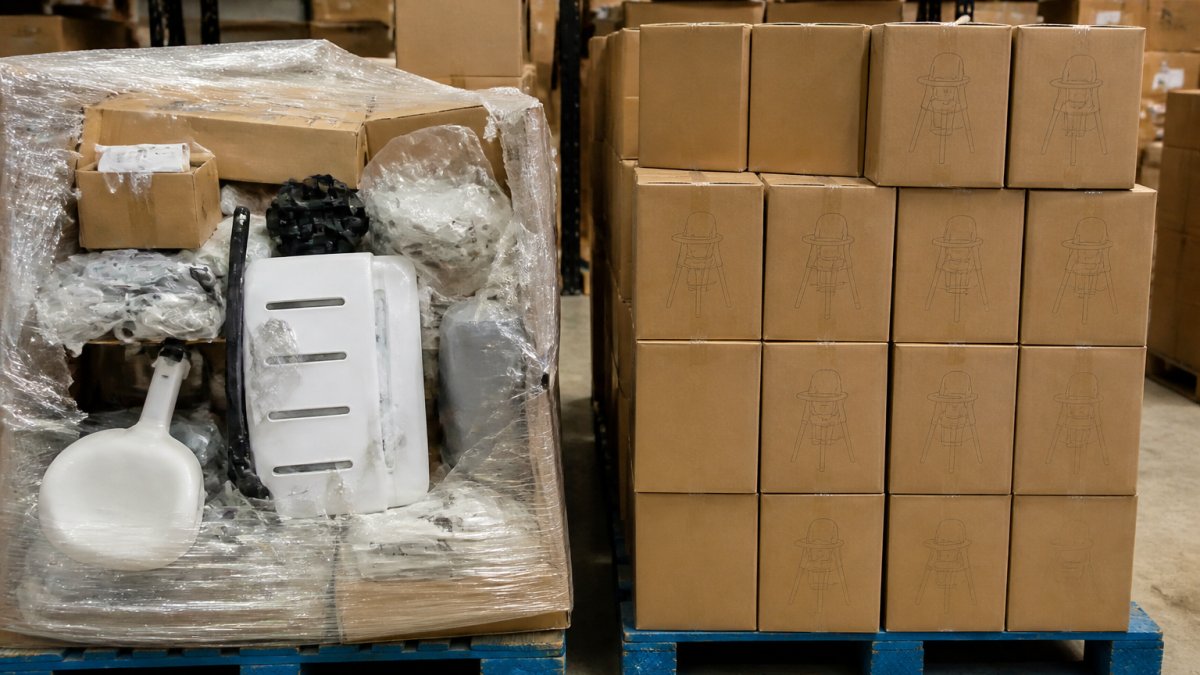
Condition grading runs from new to salvage. Ask every seller how they grade and whether returns are mixed in. Checklist before committing:
- Request the manifest and verify item counts
- Confirm the condition grade and return percentage
- Check the total cost including freight
Liquidation Pallet Profit Margins: Real Numbers, Full Costs, and ROI
Liquidation pallet profit margins depend almost entirely on what you paid and what you can actually sell, not the retail value printed on the manifest. Headline retail value overstates realizable revenue by a wide margin, so the only number that matters is net profit per sellable item.
Track every cost line, not just the purchase price:
| Cost Line | What It Covers | Why It Matters |
|---|---|---|
| Buying price | The lot or pallet cost | Sets your baseline |
| Buyer premium | Auction house or platform fee on the hammer price | Often 10-20% of the bid, easy to forget |
| Freight | Shipping to your location | Often the hidden killer, especially for bulky goods |
| Selling fees | Marketplace commission and payment processing | Varies by channel, typically 8-20% |
| Outbound shipping | Postage to the buyer | Rises with weight and dimensional size |
| Packaging supplies | Boxes, tape, labels, filler | Small per item, but adds up across hundreds of units |
| Labor | Your time sorting, photographing, listing, packing | Assign an hourly rate so you know if the lot is worth doing |
| Unsellable write-off | Items you cannot move at any price | Cuts net profit and must be estimated before you buy |
| Storage | Rent, shelving, climate control | Monthly cost that grows with slow-moving inventory |
| Taxes and compliance | Sales tax, income tax, resale certificates | Varies by state and entity type |
How to Calculate Item-Level Net Profit
Do not calculate profit per pallet. Calculate it per sellable item, the unit you actually list and ship:
- Start with total landed cost: buying price + buyer premium + freight + inspection or handling fees.
- Estimate sellable count. If the manifest lists 200 items but the grade suggests 15-25% unsellable, plan around 150-170. Use the conservative end.
- Estimate average resale price per item using completed-sale data for the specific brands and categories, not the manifest retail price.
- Subtract per-item selling fees, outbound shipping, and packaging, commonly 25-40% of resale price combined.
- Subtract your labor and a share of storage.
- The remainder is net profit per item. Multiply by sellable count for lot-level net profit.
A Worked Example
Suppose a manifested lot costs $1,200, the buyer premium is 15% ($180), and freight is $250. Total landed cost is $1,630. The manifest lists 200 items, but the grade suggests 20% unsellable, so you plan around 160 sellable items, about $10.19 landed cost per sellable item.
If the average resale price is $28, and selling fees, outbound shipping, and packaging take 35% ($9.80), your gross margin per item is $28 − $9.80 − $10.19 = $8.01 before labor and storage.
Return on Investment
ROI is net profit divided by total cash invested. In the example above, $981 net profit on $1,630 invested is about 60% ROI.
A common mistake is treating the first month's sales as the lot's performance. Track sell-through rate over 30, 60, and 90 days.
For broader guidance on small-business financial planning and the records you should keep, the IRS small business and self-employed tax center covers deductions, estimated taxes, and recordkeeping requirements.
How to Sell Incomplete Liquidation Sets Without Losing Your Margin
Incomplete sets are the quiet margin killer in liquidation reselling. When a multi-piece product arrives missing one component, the whole set becomes unsellable at full price and ties up cash.
You have three options:
- Discount the partial set and accept a lower margin
- Hold the pieces and hope a matching set arrives later
- Find the missing component and complete the set
The third option recovers the most value, but finding one specific missing piece across hundreds of boxes is where most resellers give up. This is exactly the problem Find The Other Box was built to solve.
If you are sitting on incomplete liquidation sets, you do not have to write them off. List the extras and request the missing pieces on the same listing, and let the community complete the set with you.
Listing, Channels, and Inventory Operations That Protect Your ROI
Channel choice should follow the product, not your habit. A single high-value electronics item belongs on a marketplace with strong buyer protection; bulk low-value goods move faster through volume channels.
Inventory operations matter as much as sourcing:
- Sort by category and condition the day a load arrives
- Photograph products in consistent, well-lit batches
- List fast, because aging inventory loses value
A common mistake is letting unsorted inventory pile up. The longer a box sits unopened, the less likely it gets listed. Treat sorting and listing as part of the buying process, not an afterthought.
Conclusion
The hardest part of reselling overstock goods for profit is not finding cheap inventory. It is recovering the value trapped in incomplete sets and unsellable partials that quietly drain your margin. Find The Other Box gives resellers a dedicated marketplace to match missing box numbers, sell extras, and request the pieces they need on the same listing. Turn stranded inventory into profit, clear the storage space those partial sets occupy, and recover your investment. Start Matching For Free and complete your sets.
Frequently Asked Questions
Is reselling overstock goods actually profitable?
Yes, but the margin lives in the details. Profit depends on your buying price, the condition of the lot, selling fees, freight, and how much of the load is actually sellable. A lot that looks like a 70% margin on paper can drop to 20-30% once returns, unsellable items, and shipping are subtracted. Track gross profit, net profit, and ROI per lot rather than per item, and you'll know within two or three loads whether reselling overstock works for your budget.
Where is the best place to buy overstock inventory for resale?
Most resellers start with liquidation marketplaces, retailer surplus programs, and wholesale liquidators that publish manifests before the sale. The best liquidation websites for beginners show item counts, condition grades, and whether the load is manifested. Beyond that, local auction houses and direct relationships with liquidators often beat online prices because you can inspect before you bid. Compare at least three sources on the same category before committing capital.
What are the risks of buying liquidation and overstock pallets?
The main risks are unmanifested loads, inflated retail MSRP claims, missing components, and freight costs that eat the margin. Customer returns and shelf pulls often arrive with damaged packaging or missing parts, and unsellable items can wipe out a thin spread. Always ask for the manifest, confirm the condition grade, and budget 10-15% of your buying price for surprises. Never spend money you need back within 30 days.
How do I handle incomplete product sets when reselling overstock?
Incomplete sets are the most common reason resellers lose money on liquidation lots. Instead of dumping them, list the partial set with a clear note about which pieces are missing and what you have available. Marketplaces built for matching missing box numbers let you sell your extras and request the pieces you need on the same listing, which turns stranded inventory into sellable inventory and clears storage space without a fire sale.
What is the difference between overstock, shelf pulls, and customer returns?
Overstock is unsold retail inventory, usually in original packaging and the cleanest category to resell. Shelf pulls are items removed from store shelves, often for packaging changes or seasonal resets, and may show handling wear. Customer returns have been opened or used, so expect missing parts, damage, and a higher unsellable rate. Each category deserves a different buying price and a different profit assumption.
How much should I pay for a liquidation pallet to stay profitable?
A common rule is to pay no more than 20-30% of the realistic resale value of the sellable items, not the retail MSRP printed on the manifest. That spread has to cover selling fees, shipping, storage, and the unsellable portion of the load. If a pallet is priced above that range, walk away. Pricing on liquidation platforms varies by category and volume, so check current listings before you commit.