 How-to
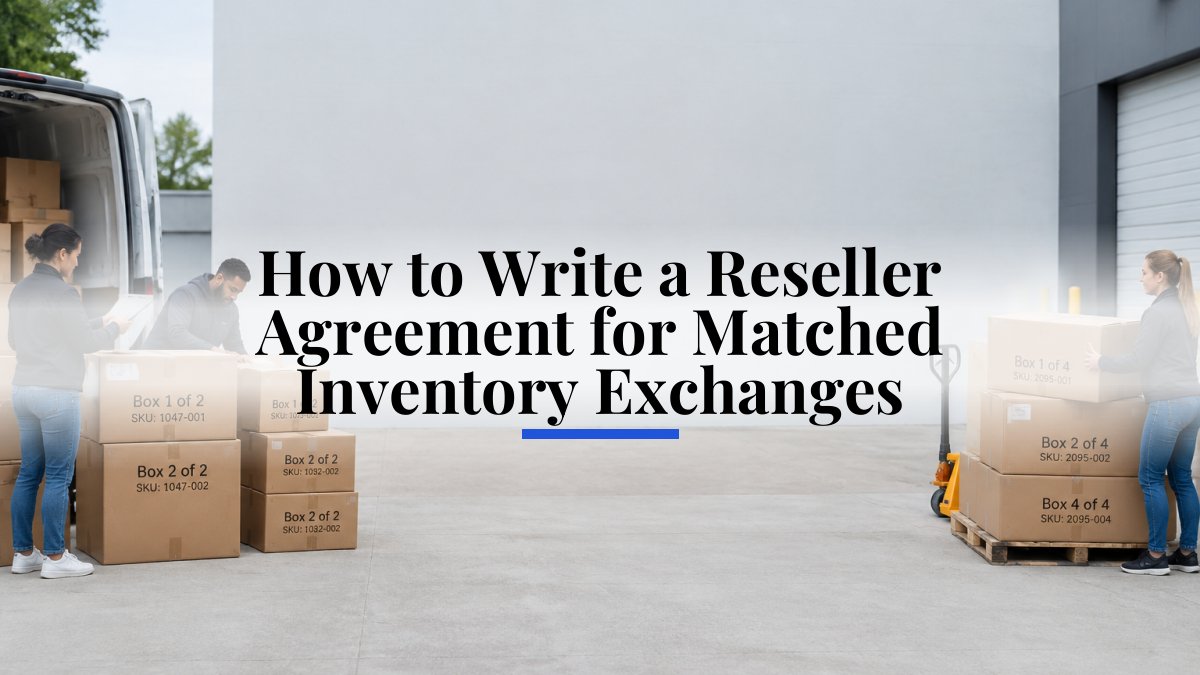
How to Write a Reseller Agreement for Matched Inventory Exchanges
Last Updated: November 12, 2026
Quick Summary
A reseller agreement for matched inventory exchanges is a short written document that records the exact items, count, and condition each person is giving and receiving, plus any balancing payment and the meetup details. Both parties sign it before the swap, which protects both sides if a count or condition is later disputed.
- Name each product, model, and exact count as a number, not a range.
- Count and inspect items together at the meetup, and photograph the count and any damage.
- Write any balancing payment amount, payer, and timing into the agreement before the handover.
- Set a claim window, such as 48 hours, and agree on a resolution option in advance.
- Keep the signed agreement, condition checklist, photos, and bill of sale together.
Table of Contents
- Why Individual Pallet Buyers Need a Written Reseller Agreement for Matched Inventory
- Reseller Agreement vs. Inventory Exchange Agreement: Which Fits Your Swap
- Key Clauses for Individual Pallet Buyers Swapping Partial Sets
- Building a Reseller Agreement Template for Your Next Meetup
- Using an Inventory Condition Checklist at the Exchange Point
- Documenting the Handover with a Bill of Sale for Inventory
- Your Next Step: Drafting a Simple Agreement Before Your First Swap
- Frequently Asked Questions
Why Individual Pallet Buyers Need a Written Reseller Agreement for Matched Inventory
Most pallet buyers never write anything down.
A written agreement turns a vague deal into a clear one. It records what each person is giving, what they are getting, and when the exchange happens.
Here is why it matters for a small, in-person swap:
- It sets the exact items. "Box 1 of 2" means nothing until you name the product, model and count.
- It sets the condition. Both sides should agree what "new," "open box," or "damaged" means.
- It sets who pays what. Balancing payments are easy to forget when one set is worth more.
Many resellers find that a one-page document is enough. For the broader process of matching and agreeing terms with another reseller before you meet, read How to Coordinate Local Inventory Exchanges Safely.
Reseller Agreement vs. Inventory Exchange Agreement: Which Fits Your Swap
A reseller agreement is usually a longer contract between a supplier and a reseller, covering territory, pricing and ongoing terms. An inventory exchange agreement is narrower.
For most individual pallet buyers, the exchange agreement fits better. You are not appointing anyone to sell for you.
| Feature | Standard Reseller Agreement | Matched Inventory Exchange Agreement |
|---|---|---|
| Purpose | Ongoing right to resell | One-time or occasional swap |
| Length | Often several pages | Often one to two pages |
| Parties | Supplier and reseller | Two individual resellers |
| Covers pricing | Ongoing discounts | Balancing payment for the swap |
| Best for | Dealers and distributors | Pallet buyers meeting in person |
If you are only trading missing pieces, the exchange agreement is the right starting point.
Key Clauses for Individual Pallet Buyers Swapping Partial Sets
A good exchange agreement needs only a handful of clauses, but each one should be specific enough that a stranger could follow it. The difference between a clause that holds up and one that causes an argument is usually a single missing detail: a count, a deadline, a condition grade, or a named person.
- Parties: Full legal names, a phone number each person answers, and an email for written follow-up. If either side is buying through a business entity, name the entity and the person signing for it. A common pattern is to add "signing in a personal capacity" only when the individual is personally guaranteeing the swap.
- Items: The product name, model or SKU, and the exact count being given and received. Write the count as a number, not a range. If a set is split across boxes, list each box separately.
- Condition: A grade both sides understand, plus how each side will verify it at the meetup. Use plain terms such as "sealed," "open box, all parts present," or "damaged, excluded from swap." Avoid "as-is" unless you also state what the buyer is allowed to inspect before accepting.
Keep wording plain. Write "one case of 24 blue mugs, model 4417" rather than "a quantity of mugs." A clause that a stranger could not enforce is not really a clause.
Describing Quantity, Condition, and Missing Pieces
Quantity and condition cause most swap disputes. Be exact about both, and use a format that survives a second count at home.
Write the count as a number, not a range. Write the condition using terms both sides understand, such as "sealed," "open box, all parts present," or "damaged, not included in swap." For missing pieces, list what is absent and who is supplying it. For example:
- Box 1 of 2: 10 units, all sealed
- Box 2 of 2: 9 units, 1 unit has a cracked lid and is excluded from the swap
- Missing from the set: 1 unit, to be supplied by the other party
A practical pattern is to assign each unit a line and a condition code, then total the lines. Naming the gap makes it easy to see whether the set is really complete, and it gives both sides a shared reference if a count is disputed later. Coordinates for each line also help keep matched family sets together when gently used pieces are prepared for resale.
Handling Disputes After an In-Person Exchange
Disputes often start after the meetup, when someone counts again at home. Your agreement should say what happens next, and the mechanism should be short enough that both sides actually follow it.
A simple approach:
- Count together at the meetup. Do the check before anyone drives away. A shared count at the point of exchange is the single most effective dispute prevention step.
- Photograph the items and the count. Keep the photos with the signed agreement. Photograph the open box, the labels, and any damage.
- Set a short window for claims. For example, 48 hours to report a mismatch. State whether the window runs from the meetup or from the first business day after it.
- Agree a fix in advance. Options include a make-up swap, a balancing payment, or an agreed return of the item. Name which option applies first, so neither side has to negotiate under pressure. To see how returns from matched inventory are handled when something is wrong, read how to manage returns from matched inventory.
Write the window and the fix into the agreement itself, so neither side has to guess later. If a swap has already gone wrong, practical guidance on trading missing items fairly can help you work through the next steps.
Building a Reseller Agreement Template for Your Next Meetup
Use this template as a starting point. Fill in the blanks and adapt it to your deal. The sections below go beyond a bare skeleton: they add the valuation, balancing-payment, and reconciliation mechanics that most templates leave out, which is where in-person swaps usually go wrong.
Matched Inventory Exchange Agreement
Party A: [Full name, phone, email] Party B: [Full name, phone, email]
Items from Party A: [Product, model, count, condition grade] Items from Party B: [Product, model, count, condition grade]
Valuation method: [Agreed unit value per item, or the method used to set it, such as recent resale listings or a shared price reference] Balancing payment (if any): [Amount, paid by whom, when, how] Meeting date, time and place: [Details]
Condition check: Both parties count and inspect items together at the meeting. Claim window: Any mismatch must be reported within [number] hours of the meeting. Resolution: [Make-up swap / payment / agreed return]
Signed by Party A: ____________ Date: ______ Signed by Party B: ____________ Date: ______
Setting Valuation and Balancing Payments
When two partial sets are not equal in value, the swap needs a balancing payment or a credit. The agreement should say how the value was set, not just the final number, so neither side can relitigate it later.
A common pattern among individual resellers is to value each item at an agreed unit price and multiply by the count. If the two sides are close, the difference becomes a cash true-up paid at the meetup.
Watch out: a balancing payment that is only discussed verbally is the most common source of post-meetup disagreement. Write the amount, the payer, the payee, and the timing into the agreement before anyone loads a car.
Reconciliation Deadlines and Recordkeeping
Reconciliation is the step where both sides confirm that what was exchanged matches what was agreed.
- At the meetup: count and inspect together, photograph the count and any damage, and have both parties initial the checklist.
- Within the claim window: each side confirms the count at home and reports any mismatch in writing, with photos.
- After the window closes: the exchange is treated as accepted, and any later discrepancy is handled as a goodwill matter rather than a claim.
Keep the signed agreement, the condition checklist, the photos, and any bill of sale together in one folder, digital or paper.
This is a general starting point, not legal advice. Check local rules if you are unsure, and consider a professional review for larger deals.
Using an Inventory Condition Checklist at the Exchange Point
Bring a short checklist to every meetup. For safe meetup guidance to pair with these condition checks, see safe meetup tips for local pallet part exchanges.
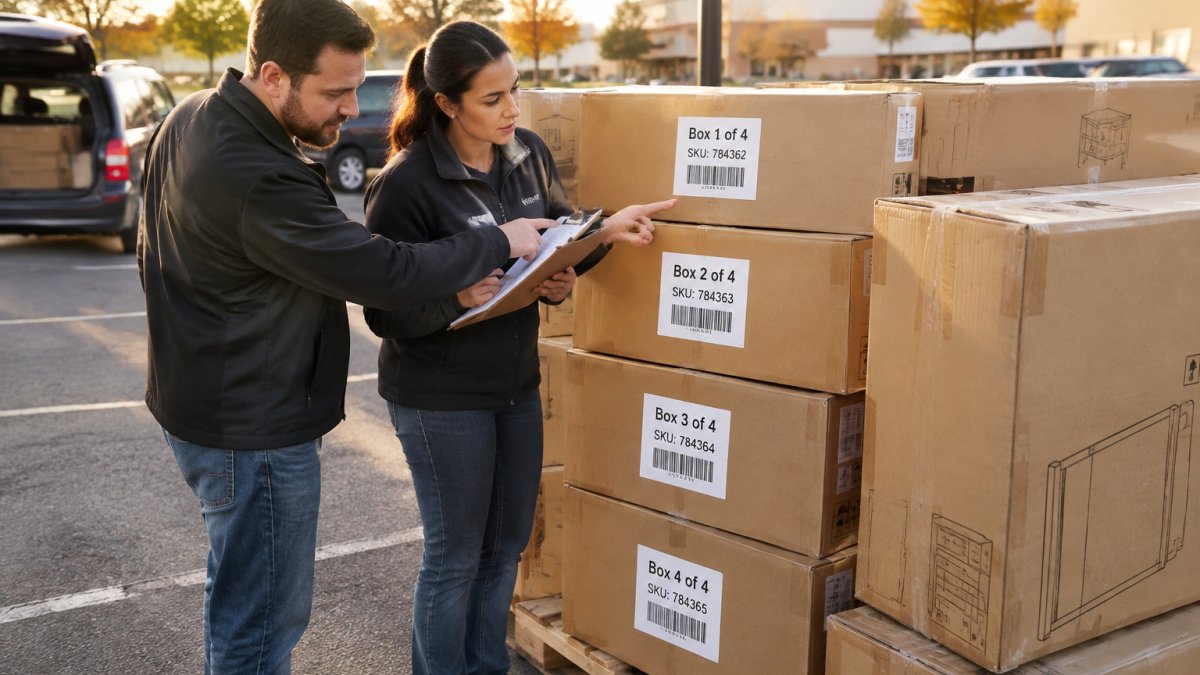
- Confirm the product name and model match the agreement
- Count every unit in front of the other party
- Note the condition of each unit (sealed, open, damaged)
- Check labels and barcodes against the list
Keep your stock records accurate and backed up. Good records make it much easier to prove what was agreed. To keep your pallet and partial-set stock accurate, see how to prevent inventory data loss.
Documenting the Handover with a Bill of Sale for Inventory
A bill of sale records the transfer itself. Use it when a balancing payment changes hands, or when you want a clear receipt for what left your possession.
It should list:
- The date and place of the handover
- Each item, its count and condition
- The payment amount, if any, and how it was paid
- Both parties' names and signatures
Give each party a copy. Pair the bill of sale with the signed exchange agreement and your condition photos, and store all three together.
Your Next Step: Drafting a Simple Agreement Before Your First Swap
You do not need a perfect contract to start. You need a clear one. Pick your next partial-set swap, fill in the template, and walk through the checklist at the meetup.
Find The Other Box helps individual resellers find the missing pieces for their sets. Start Matching For Free, and bring a written agreement to your first exchange so both sides know exactly what they are trading.
Frequently Asked Questions
What is a reseller agreement?
A reseller agreement is a written contract that sets out the terms under which one party resells another party's products. It typically covers what is being exchanged or sold, pricing and payment, how title and risk of loss pass between the parties, the condition the goods are in, and what happens if something goes wrong. For individual pallet buyers swapping partial sets, a reseller agreement makes clear who owns each item, what quantities were agreed, and how disputes will be handled. Even a short, plainly written agreement signed by both sides is far better than a verbal understanding.
Do individual resellers need a written agreement to exchange inventory?
No law requires a written agreement for every small exchange, but a written record protects both people. When two resellers meet in person to match sets, a simple reseller agreement or inventory exchange agreement shows what was promised, what was received, and at what agreed value. Without one, disagreements about missing pieces or damaged goods often come down to memory. Writing the terms down before the handover takes only a few minutes and can prevent a costly argument later.
How should resellers document the condition and quantity of exchanged items?
Use an inventory condition checklist completed by both parties at the meetup. List each item by product name, model or SKU, quantity, and visible condition such as new, opened, scratched, or damaged. Photograph the items and the labels together, and have both people initial each line. Note any pieces that are missing from the set so the gap is recorded rather than discovered later. Keeping the checklist and photos with the signed agreement gives you a clear reference if questions come up.
Should resellers use a bill of sale or an inventory exchange agreement?
They serve different purposes. A bill of sale records a transfer of goods, usually for a payment, and confirms the buyer received them. An inventory exchange agreement covers a two-way swap, where each party gives items to complete the other's set and may include a balancing payment. For matched inventory swaps, an exchange agreement is usually the better fit, and a bill of sale can be attached to document the handover of any cash paid to balance the value. Using both together gives the clearest paper trail.