 how-to
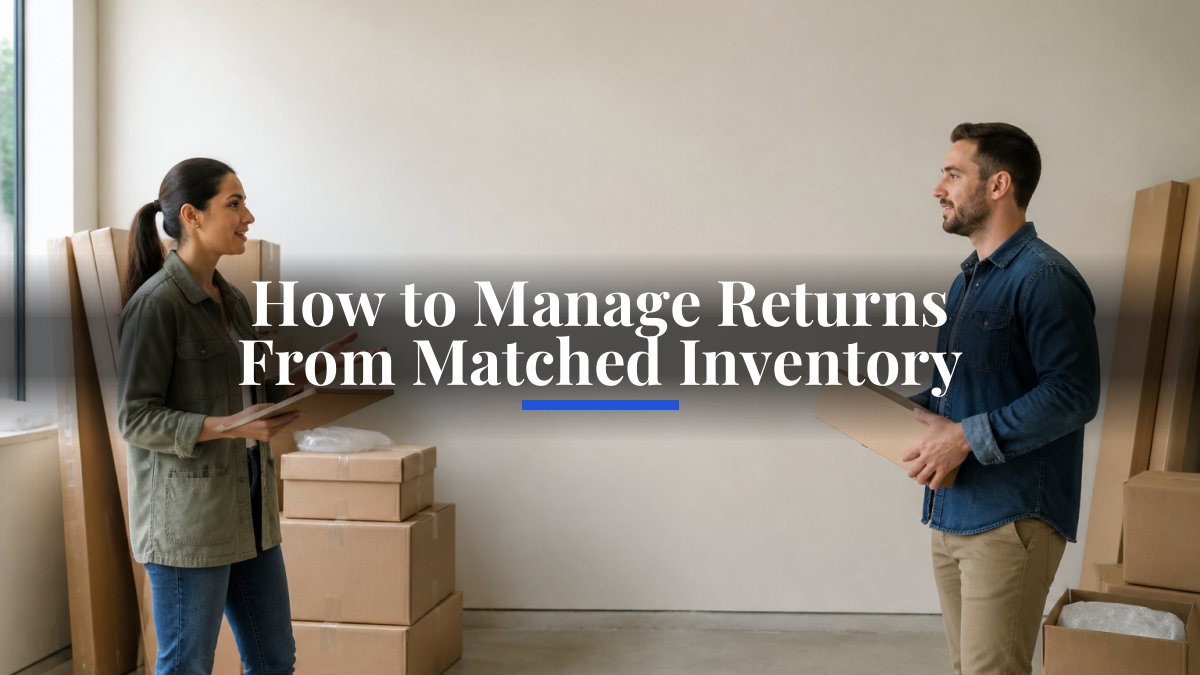
How to Manage Returns From Matched Inventory
Last Updated: October 25, 2026
Quick Summary
How to manage returns from matched inventory involves creating a written return agreement with your matching partner before the exchange, documenting each component's condition with photos and checklists, and establishing clear policies for partial returns, defective items, and dispute resolution. Use the platform's component-level records and on-platform messaging to keep a complete paper trail that protects both resellers when disputes arise.
- Create a written return agreement covering inspection windows, latent defect clauses, partial returns, refund methods, and dispute resolution before meeting in person.
- Document inventory condition with individual photos of each component, a brief condition report, and a completed inspection checklist stored for each transaction.
- Use a consistent inspection checklist for every set covering completeness, functionality, packaging, cosmetic condition, and missing parts to reduce disputes.
- Decide upfront whether you accept partial returns, full returns, or component replacements for defective items, then communicate your policy clearly.
- Keep all return communication and component records on the matching platform's messaging system to create a shared record both parties can reference if disputes arise.
Table of Contents
- Why Return Management Matters for Matched Sets
- Creating a Reseller Return Agreement Template
- Documenting Inventory Condition Before Exchange
- Using a Liquidation Inventory Inspection Checklist
- Handling Defective Items in a Product Set
- Managing Partial Returns and Disputed Claims
- Setting Up Your Return Process on Find The Other Box
- Frequently Asked Questions
Why Return Management Matters for Matched Sets
Learning how to manage returns from matched inventory is a critical skill for resellers working with incomplete product sets. Understand the broader safety and risk context of matched inventory before implementing return procedures.
Returns happen: a component doesn't work as advertised, or packaging arrives damaged. The question isn't whether they'll occur, but how you handle them.
Return management differs for matched sets: you're managing a transaction between two resellers who assembled the set together, often meeting in person. A disputed return can strain that relationship and leave you holding inventory that's harder to sell.
The core challenge is simple: how to manage returns from matched inventory without losing money, damaging your reputation, or creating conflict with your matching partner. A clear process protects both sides.
Creating a Reseller Return Agreement Template
A written return agreement sets expectations before the exchange.
Standard e-commerce return templates assume a faceless buyer and a shipping label. That model breaks down when two individual resellers meet to swap components.
Your agreement should cover these basics:
- What condition means. Define what "like new," "good," and "acceptable" actually look like. Don't assume the other reseller interprets these the same way you do. Use specific language: "No cracks, all buttons functional, light shelf wear on housing acceptable."
- Inspection window at the meetup. Unlike shipped returns, in-person exchanges allow immediate inspection. Build in a 10-15 minute inspection period at the meeting point. Both parties confirm components and condition before parting ways. Once both parties leave, the sale is final unless a latent defect is discovered.
- Latent defect clause. Define a short window (typically 24-48 hours) for reporting defects that could not be detected during the in-person inspection, for example, an internal fault that only appears after a full power cycle. This protects the buyer without opening the door to buyer's remorse.
- Component-level returns. Can the buyer return one component from a matched set, or must they return the whole thing? For matched sets, partial returns are common because one component may be defective while the rest are fine. State clearly whether you accept partial returns and how you handle the remaining components.
- Who bears the cost of a re-exchange. In local peer-to-peer exchanges, there is no shipping label. If a return is warranted, who travels to whom? A common pattern is that the party at fault covers the cost of the return trip or meets the other party halfway. Put this in writing.
- Refund method and timeline. For in-person exchanges, refunds are often cash or peer-to-peer payment apps. State the method and timeline: "Refund issued at the time of return inspection" or "Refund processed within 2 business days of confirmed return."
- Dispute resolution. Agree on a neutral step before escalating to a marketplace: a phone call, a second inspection, or mediation through the platform where you matched. This saves time and preserves the relationship.
Keep the language simple and direct so the other reseller understands every sentence on the first read.
A basic template for a local matched-set exchange might look like this:
Return Agreement for In-Person Matched Set Exchange
This agreement covers the exchange of a matched product set between two individual resellers on [date].
Inspection: Both parties will inspect all components at the meeting point. Condition is confirmed as [describe]. Any visible defects must be noted before the exchange is complete.
Latent defects: The buyer may report defects not detectable during inspection within 48 hours. The seller will offer a replacement component, a partial refund, or a full return at the buyer's discretion.
Partial returns: If one component is defective, the buyer may return that component alone. The seller will refund the agreed value of that component and the buyer keeps the rest of the set.
Return logistics: If a return is warranted, the party at fault will coordinate with the other party for the return within 7 days.
Refund: Refunds are issued by [method] at the time of return inspection.
Dispute resolution: Both parties agree to attempt resolution by phone or through the matching platform before escalating.
Share this template before the exchange through the platform's messaging system or hand over a printed copy at the meetup. The more transparent you are upfront, the fewer disputes you'll face later.
Documenting Inventory Condition Before Exchange
Before you hand off a matched set, document what you're selling. This protects you if a return dispute arises.
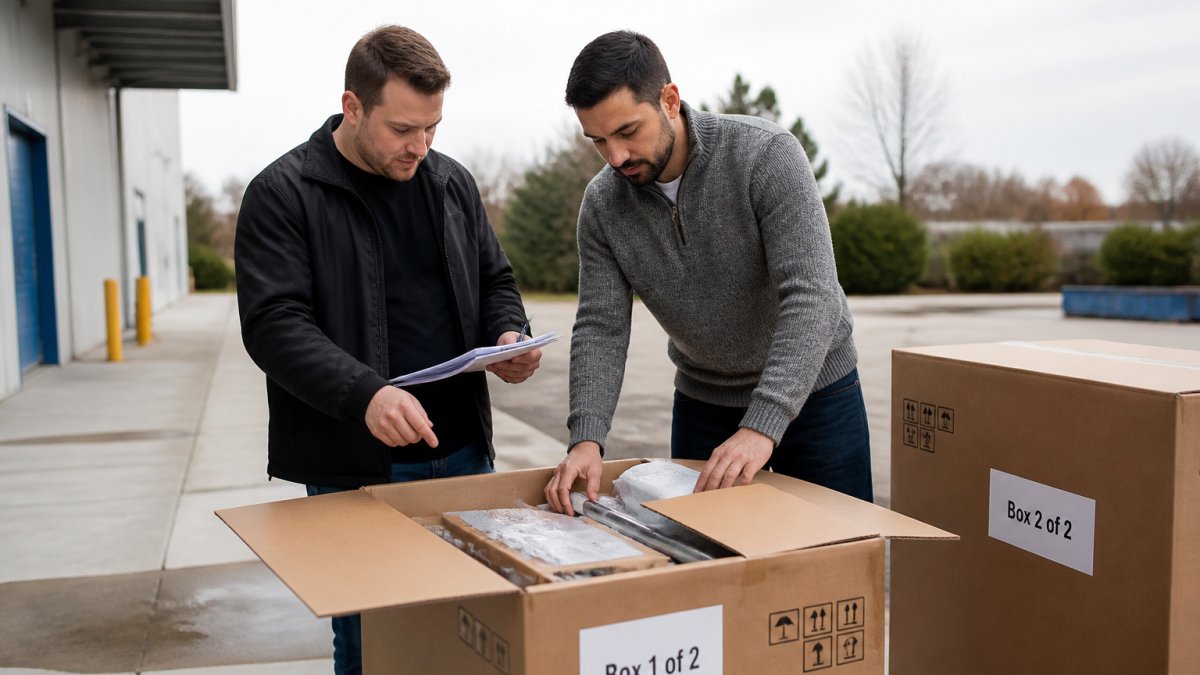
Take photos or video of the complete set before packaging: each component individually, the full assembly together, and any scratches, dents, or wear.
Write a brief condition report.
Store these photos and notes in a folder for each transaction.
This step takes 10-15 minutes per set. It feels tedious until a return dispute forces you to prove what you exchanged. Then it becomes invaluable.
Using a Liquidation Inventory Inspection Checklist
A checklist keeps you consistent. Every set gets the same inspection. Every return gets evaluated the same way.
Your inspection checklist should include:
- Completeness: Are all components present? Check against the original set description.
- Functionality: Do items power on? Do they operate as intended? Test if you can safely do so.
- Packaging: Is original packaging intact? Are instruction manuals included?
- Cosmetic condition: Note scratches, dents, discoloration, or wear. Be specific about location and severity.
- Smell or stains: Flag items that smell like smoke, perfume, or other odors. Note any stains or discoloration.
- Missing parts: Are all small components, cables, or accessories included? List anything absent.
Use the same checklist for incoming inventory and returns. Consistency reduces disputes.
Here's a sample checklist format:
| Component | Present | Functions | Condition | Notes |
|---|---|---|---|---|
| Item 1 | Yes / No | Yes / No | Good / Fair / Poor | [Specific details] |
| Item 2 | Yes / No | Yes / No | Good / Fair / Poor | [Specific details] |
| Packaging | Yes / No | , | Good / Fair / Poor | [Specific details] |
| Accessories | Yes / No | , | Good / Fair / Poor | [Specific details] |
Keep these checklists for every transaction. They're your proof if a buyer disputes a return claim.
Handling Defective Items in a Product Set
Your agreement should address this, but here's how to handle it in practice:
Option 1: Return the entire set. The buyer returns the full matched set. You refund them and resell the set as-is or liquidate individual components. This is clean but expensive for the buyer.
Option 2: Replace the defective component. You source a replacement for the defective item and provide it to the buyer.
Option 3: Partial refund. You refund the buyer a percentage of the sale price (typically 20-40%, depending on the component's value).
Your choice depends on your margins and your willingness to chase replacements. Be clear about which option you offer.
If the defect is your fault, you didn't test the item, or you misrepresented its condition, offer Option 2 or 3.
Managing Partial Returns and Disputed Claims
Here's how to handle them:
Partial returns: If your agreement requires the buyer to return the entire set, you can refuse to refund for a partial return. But that's aggressive. A more practical approach: accept the partial return, refund them for the returned components, and keep the rest of the set. You can resell the remaining items individually or find another buyer for the partial set. Learn more about resale strategies for incomplete sets.
Condition disputes: The buyer claims the item arrived damaged. Your photos show it shipped pristine. Request photos from the buyer showing the damage.
Missing components: The buyer claims a component was missing from the set. Your checklist shows you included it.
The goal is to resolve disputes quickly. A 20% partial refund takes 5 minutes and preserves the relationship.
Document everything. Keep photos, messages, and checklists. If a dispute escalates to a marketplace or payment processor, you'll have proof to support your position.
Setting Up Your Return Process on Find The Other Box
Find The Other Box helps resellers match incomplete sets efficiently.
Here's how to integrate return management into your local exchange workflow:
Before the exchange: build a component-level record. Don't just upload a photo of the whole set. Create a catalog entry for each item: name, condition, and individual photos. Returns from matched sets often involve a single component, and a group photo gives you no proof of what that component looked like before the exchange. This is especially important when matching incomplete sets such as "Box 1 of 2", "Box 2 of 2", "Box 2 of 3", etc., each component needs its own documented condition so you can track which pieces are being returned.
A simple component record might include:
- Component name and description
- Condition grade (use your own scale: A, B, C or Excellent, Good, Fair)
- Individual photos from multiple angles
- Any known defects or wear
- Whether original packaging or accessories are included
After the exchange: keep communication on-platform. If the other reseller has questions about a component, respond through the platform's messaging system rather than text or email.
If a return happens: coordinate the re-exchange on-platform. Use the messaging system to confirm the return location, the components being returned, and the refund method.
The platform makes it easier to track multiple matched sets and manage returns at scale, essential as your inventory grows and you coordinate multiple local exchanges in the same week.
Frequently Asked Questions
What should a return agreement between resellers include?
A return agreement should specify what condition each item must be in upon receipt, the timeframe for inspecting and reporting issues (typically 3-7 days), how partial returns are handled, and the refund or replacement process. This protects both parties and prevents disputes after the transaction.
How should resellers agree on returns before matching inventory?
Discuss return terms before finalizing the match: agree on inspection windows, acceptable condition standards, and how defective items will be handled. Document whether items can be returned for full refund, partial credit, or replacement only. Writing these terms down prevents misunderstandings and protects your investment.
What should you do if an item from a matched set is defective?
Report the defect immediately with photos and documentation of the condition. Reference your return agreement to determine next steps: full refund, partial credit, or replacement from inventory. If the defect was present before exchange, the other reseller is responsible; if it occurred after, you may need to absorb the loss. Document everything in writing and keep records for future reference with that reseller.
How can resellers document the condition of matched items?
Take timestamped photos of each item before and after the exchange, noting any wear, damage, or missing components. Create a written inventory list describing condition (new, like-new, good, fair, poor) for each piece. Keep records for at least 30 days after the transaction to resolve disputes quickly if issues arise.
Returns are inevitable when you're buying and selling matched inventory. What matters is having a process that protects you, respects your buyer, and resolves disputes fairly. A clear agreement, good documentation, and a consistent inspection process turn returns from a headache into a manageable part of your business. Start with these steps, refine them as you learn what works for your operation, and you'll build trust with your matching partners that keeps them coming back.