 how-to
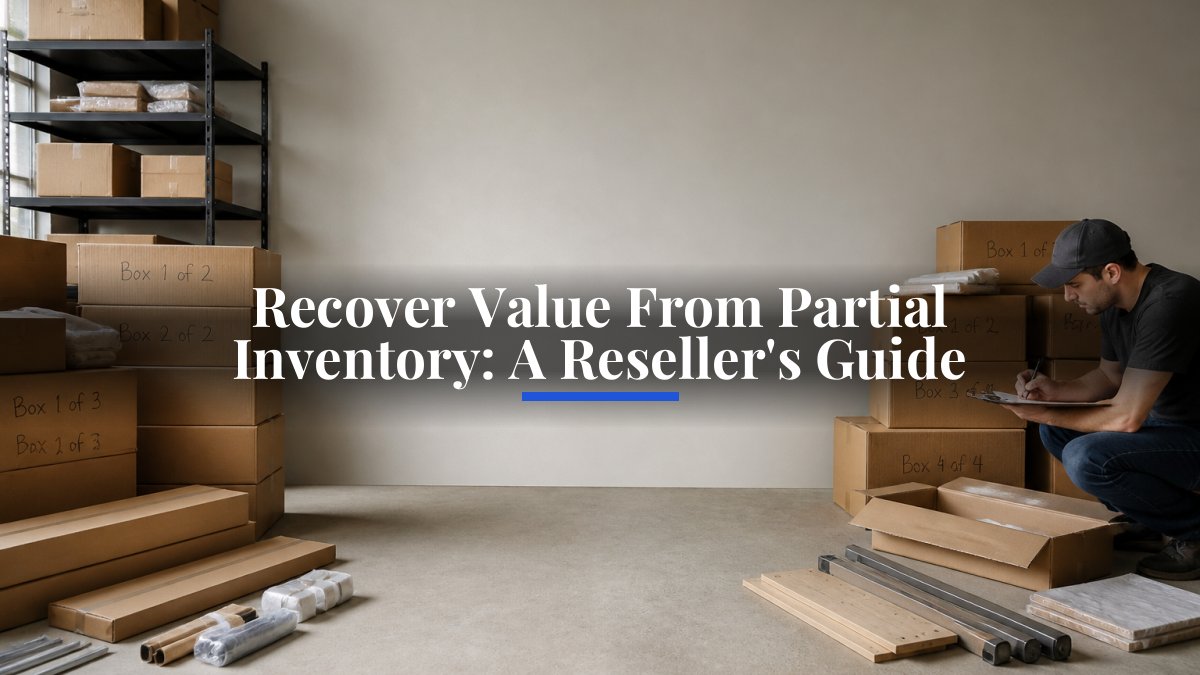
Recover Value From Partial Inventory: A Reseller's Guide
Table of Contents
- Why Partial Inventory Costs You Money
- How to Value Unsold Inventory and Partial Sets
- Assessing Condition and Identifying What You Have
- How to Sell Incomplete Product Sets Through Matching
- Returned Inventory Resale: Channels and Strategies
- Execution: From Listing to Handoff
- Frequently Asked Questions
Last Updated: October 21, 2026
Why Partial Inventory Costs You Money
Incomplete product sets sit in your warehouse like dead weight. A "Box 1 of 2" without its partner is nearly impossible to sell, and the storage space costs you money every month.
The real cost is opportunity cost: that shelf space could hold inventory that actually sells, and that capital could fund new purchases.
At Find The Other Box, we work with resellers facing this daily. But here's what most miss: you can recover value from partial inventory. It's just unsold.
How to Value Unsold Inventory and Partial Sets
Start by being honest about what you actually have: not what you paid for it, but what it's worth right now, in its current condition, as a partial set.
Determine your appraised value. Use completed sets of the same product on your primary marketplace as a baseline, then subtract for incompleteness. A missing box, components, or damaged packaging typically cuts value by 30-50%.
Factor in condition. A mint partial set beats one with visible wear. Be realistic about dents, scratches, fading, or missing packaging.
Consider your liquidation options. You have several channels to recover value:
- Resale to other resellers. Find matching partners who have the missing pieces. You complete the set together and both profit.
- Bulk liquidation. Sell incomplete lots to liquidators at pennies on the dollar. Fast, but lowest return.
- Refurbishment. Clean, repair, or repackage items to increase appeal. Takes time and effort.
- Recycling or donation. Recover what you can tax-wise if resale isn't viable.
A Practical Framework for Estimating Net Recovery
Calculate net recovery for each partial set before choosing a channel:
Net Recovery = (Expected Sale Price) − (Inspection Time Cost + Repair Cost + Storage Cost + Selling Fees + Shipping/Transport Cost)
Worked example for a partial set you're matching with another reseller:
- Expected sale price if completed: $100 (based on recent sold listings for the complete set)
- Your share after matching (50% split): $50
- Inspection time: 0.5 hours at $20/hour = $10
- Repair cost: $0 (no repairs needed)
- Storage cost (1 month): $2
- Selling fees (marketplace): 10% of $50 = $5
- Local meetup transport: $3
- Net recovery: $50 − ($10 + $0 + $2 + $5 + $3) = $30
That $30 is what you pocket. Compare liquidating the same set in a bulk lot:
- Bulk liquidation offer: $15 (for the whole lot, your share)
- Inspection time: 0.2 hours at $20/hour = $4
- Storage cost (1 month): $2
- Transport to liquidator: $5
- Net recovery: $15 − ($4 + $2 + $5) = $4
Channel-by-Channel Comparison for Individual Resellers
When you're deciding where to route a partial set, consider these trade-offs:
| Channel | Expected Return (% of complete set value) | Speed | Effort | Risk |
|---|---|---|---|---|
| Match with another reseller (in-person) | 50-70% | Medium | Medium (communication, meetup) | Low (inspect before exchange) |
| Sell as incomplete on marketplace | 30-40% | Slow | Low | Medium (returns, disputes) |
| Bulk liquidation | 10-30% | Fast | Low | Low |
| Refurbish and sell | 40-60% | Slow | High | Medium |
| Donate/recycle | 0-10% (tax benefit) | Fast | Low | None |
For individual resellers, matching often balances return and risk well, especially when you meet locally to inspect items before exchanging. Factor in time and transport costs honestly.
Assessing Condition and Identifying What You Have
Before you can recover value from partial inventory, know exactly what you're working with. Many resellers skip this and wonder why inventory doesn't move.
Damage Assessment and Product Condition
Walk through inventory with a critical eye. You're documenting reality, not grading for perfection.
Check for these specific issues:
- Physical damage. Dents, cracks, breaks, bent corners, crushed edges
- Water damage. Stains, discoloration, mold, musty smell
- Missing components. Lids without bases, single shoes without pairs, incomplete sets marked "Box 1 of 3" with no other boxes present
- Packaging condition. Torn boxes, missing labels, faded printing, tape damage
- Functional issues. Items that don't power on, don't open, won't seal, or show signs of previous use
Document everything with photos for listings and matching outreach.
Spotting Dead Stock and Excess Inventory
Dead stock won't sell at any reasonable price. It's outdated, discontinued, or simply unmarketable, different from partial inventory.
Look for these red flags:
- Items from 3+ years ago that never sold
- Seasonal products outside their season with no buyers
- Niche items with extremely limited demand
- Electronics from discontinued product lines
- Clothing in sizes or styles that consistently don't move
- Anything with visible signs of age, deterioration, or obsolescence
Excess inventory is current and sellable, but you have too much: you bought 50 units, sold 12, and 38 take up space.
For excess, focus on speed: liquidate quickly even at lower margins. For dead stock, donate, recycle, or find the one niche buyer who wants it.
How to Sell Incomplete Product Sets Through Matching
This is where the math changes: you can recover more value by finding another reseller with the missing pieces.
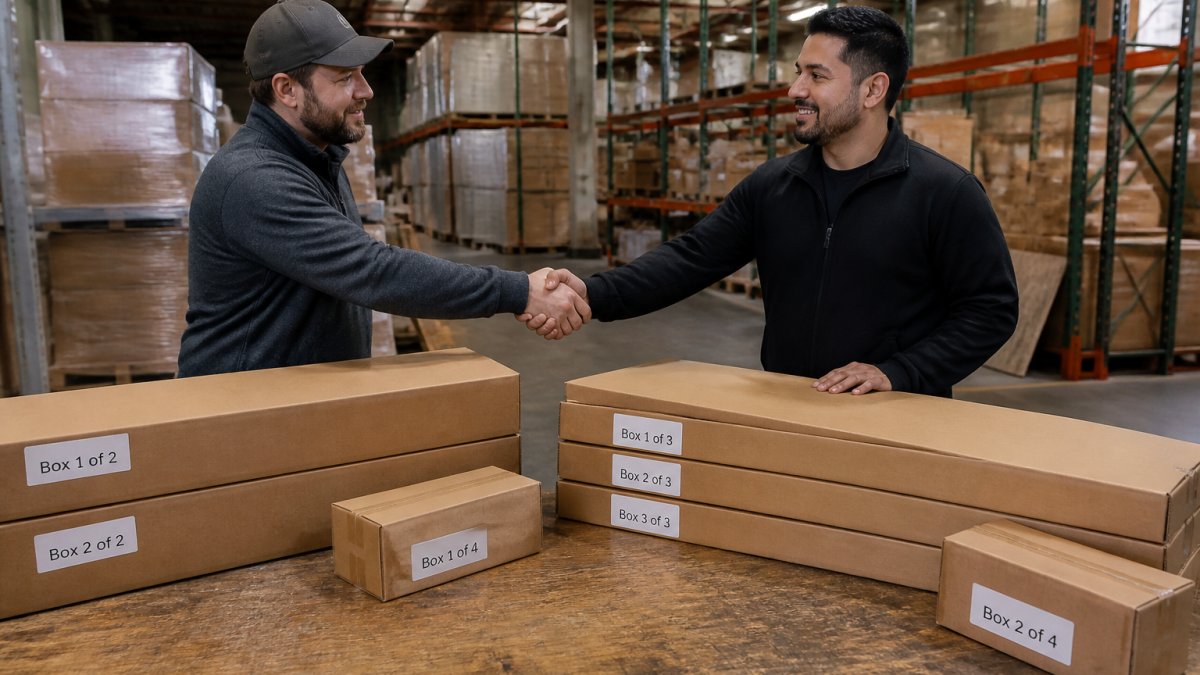
The process is straightforward. You have Box 1. Someone else has Box 2. Together, you create a complete set worth real money.
Step 1: Document what you have. List every partial set with clear photos and descriptions.
Step 2: Identify matching opportunities. A reseller with excess "Box 2" items is your perfect partner if you hold "Box 1" sets. [Services like matching incomplete sets such as "Box 1 of 2", "Box 2 of 2", "Box 2 of 3", etc.](https://findtheotherbox.com) can help connect you with resellers who have complementary inventory.
Step 3: Propose a trade or sale. Explain what you have and need.
Step 4: Arrange the exchange. Agree on terms. Are you trading? Selling? Meeting in person or shipping?
Many resellers attend the same liquidation auctions or source from the same return centers, making matches easier to find than you'd expect.
The key advantage of matching is trust. You're not dealing with a liquidator or an algorithm. You're dealing with another reseller who understands your pain.
Returned Inventory Resale: Channels and Strategies
Returned inventory differs from overstock: returns come from dissatisfaction, shipping damage, or buyer's remorse, and are often incomplete or show signs of use. For individual resellers, returns are a common source of partial sets, and a prime opportunity to recover value through matching.
Your recovery strategy depends on the return reason:
- Buyer's remorse (unopened, original packaging). Resell as "open box" or "like new." Recovery: 60-80% of retail.
- Damaged in shipping. Repair if cost-effective. Resell with disclosure. Recovery: 40-60%.
- Used or missing components. Partial inventory strategy. Find matching partners. Recovery: 30-50%.
- Defective or non-functional. Liquidate or recycle. Recovery: 5-20%.
The returned inventory resale channel works because many buyers accept "open box" or "refurbished" items at a discount, they expect a deal, not pristine condition.
Matching Partial Sets from Returns with Other Resellers
Step 1: Document the partial set thoroughly. Take clear photos, note the missing components, and record the condition. This documentation is your ticket to a successful match.
Step 2: Identify potential matches in your network. Other resellers who buy from the same return centers or liquidation auctions may have the complementary pieces.
Step 3: Propose a trade or sale. Reach out with specifics: what you have, what you need, and what you're offering.
Step 4: Arrange an in-person exchange. For individual resellers, meeting locally is often the most efficient and trustworthy way to exchange.
Many resellers operate in the same geographic area. You might both attend the same liquidation auctions or source from the same return centers.
Beyond Matching: Other Channels for Returned Partial Inventory
While matching is often the best option for individual resellers, other channels sometimes make more sense. If a partial set has sat for months with no match in sight, consider these alternatives:
- Sell as a bundle of partial sets. Group several incomplete items from the same product line and sell them as a lot to a reseller who specializes in completing sets. This can be more efficient than finding individual matches.
- List on marketplaces with clear disclosure. Some buyers specifically look for incomplete items to complete their own sets. Be transparent about what's missing and price accordingly.
- Liquidate locally. If you have a large volume of unmatched partials, a local liquidator might buy them in bulk. Expect low returns, but it clears space quickly.
- Donate for a tax deduction. If the items are in good condition, donation can provide a small recovery through tax benefits, though this varies by jurisdiction.
For individual resellers, matching offers a strong path to net recovery, especially when you can meet in person to exchange. Building a network of reliable resellers takes effort, but that network becomes a valuable asset for future partial inventory challenges.
Execution: From Listing to Handoff
Once you've identified a match or chosen your recovery channel, execution matters.
For matching with other resellers:
Create a clear listing or message. Include photos from multiple angles. Specify exactly what's included and what's missing. Be transparent about condition. Most matching partners appreciate honesty, it saves everyone time.
When you connect with another reseller, agree on specifics before you invest time:
- What's the product? (Include brand, model, size, color)
- What condition is it in? (New, like new, good, fair, poor)
- What's missing? (Be specific: missing lid, missing instruction manual, missing one shoe, etc.)
- How will you exchange? (Local meetup, shipping, partial trade, full sale)
- What's the value? (What are you asking, or what are you offering to trade?)
Most matches happen locally. Two resellers meet, inspect items, and exchange on the spot.
For liquidation channels:
Batch your partial inventory by type and condition. Liquidators buy by the lot, not by individual items. They want to know: How many units? What condition? What's included?
Provide clear photos and honest descriptions. Liquidators know they're buying incomplete inventory at a discount and are looking for honest sellers who describe it accurately.
For refurbishment:
If you're investing time to repair or clean items, track your costs. A $5 repair that increases resale value by $20 makes sense. A $15 repair that increases value by $10 doesn't. Know your break-even point.
Frequently Asked Questions
What is the best way to recover value from partial inventory?
Start by assessing condition and appraised value, then decide between liquidation, resale, or matching with other resellers. Matching partial inventory with other resellers who have complementary pieces is often the fastest way to recover value, since you turn unsellable incomplete sets into complete, saleable products. Document what you have, list it clearly, and connect with partners who can fill the gaps.
How do you value unsold inventory that is missing components?
Calculate the average selling price for a complete set, then apply a condition discount and a missing-component penalty. Factor in refurbishment cost if parts can be sourced cheaply. This gives you a realistic recovery percentage to guide your disposition strategy.
Can two resellers combine partial lots into complete sets to sell?
Yes. If one reseller has Box 1 of 2 and another has Box 2 of 2, combining them creates a complete, saleable set. This is especially effective for electronics, collectibles, and multi-part products. Both resellers recover more value than selling the partial pieces separately. The key is clear documentation of what each person has and transparent communication before you meet to complete the exchange.
What should you do with returned inventory that you cannot sell as-is?
Evaluate it for resale on secondary markets, refurbishment, or partial-set matching. Returned inventory often has minor damage or missing documentation but is still functional. Returns data also signals demand trends, helping you adjust future inventory planning. If refurbishment is not viable, consider bundling returns with other partial lots to increase sell-through rate and reduce storage costs.
Partial inventory doesn't have to be a storage burden. When you match sets with other resellers, you turn unsellable items into profitable assets. Find The Other Box connects you with resellers who have the exact pieces you need. Start matching for free and recover the value locked in your warehouse today.