 blog
Stranded Inventory Software: What Pallet Resellers Need
Quick Summary
Stranded inventory software helps pallet resellers track units that cannot be sold because a box, part or matching piece is missing. Tools with partial set tracking, location tags and simple manifest import suit individual buyers best. Local set matching with other resellers can recover value that single units cannot.
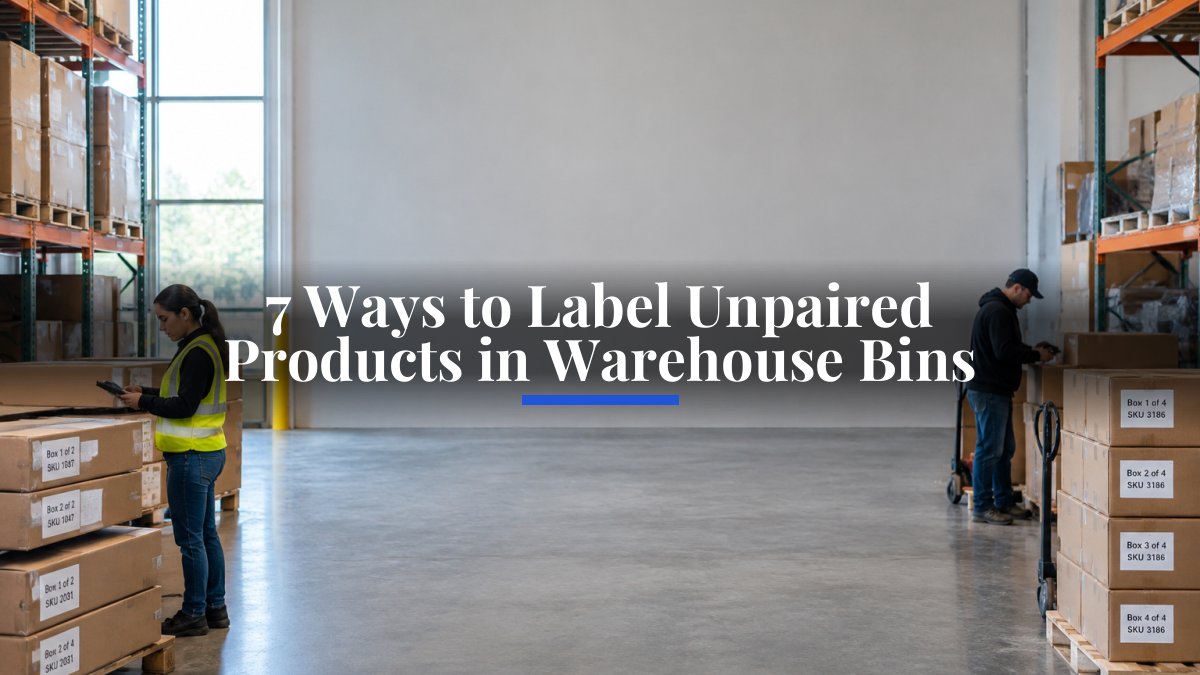
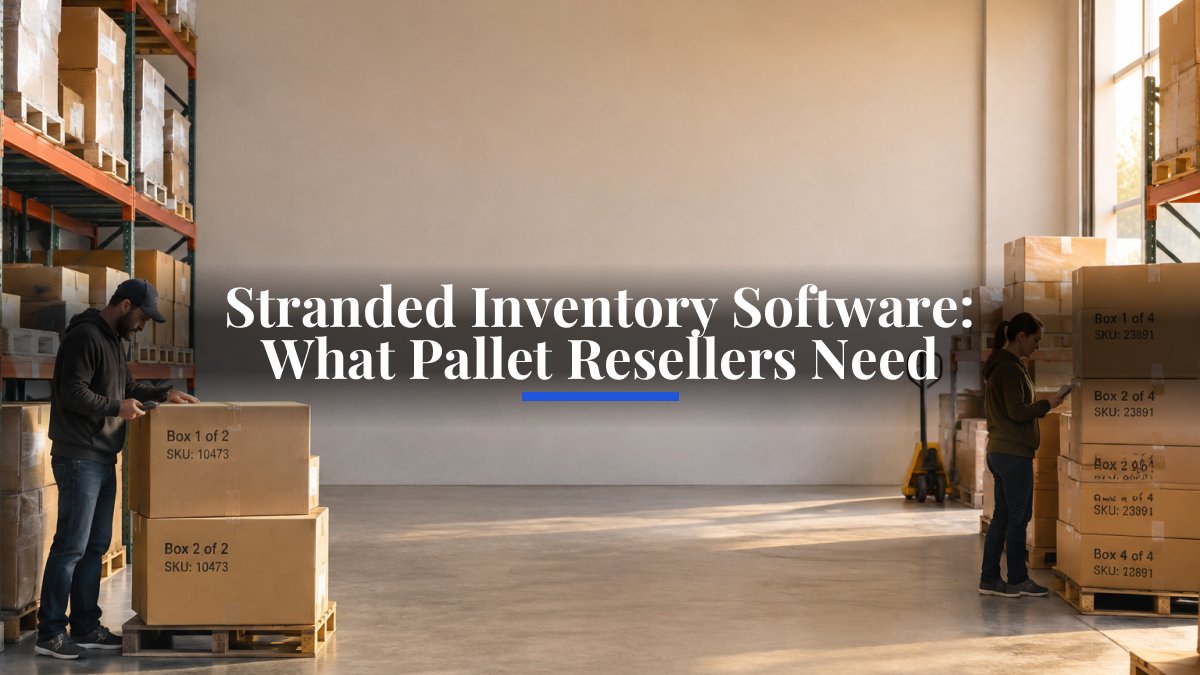
- Partial set tracking should label units like "Box 1 of 2" so you know what is still missing.
- Location tags show whether a unit sits in your garage, a storage unit or with a matching partner.
- Test any tool with a real pallet and a partial set before paying for it.
- Group Amazon stranded reports by reason code to batch fixes for units sharing one cause.
- Price partial sets against the complete-set value minus the missing part, and agree on a public meeting location.
Table of Contents
- Stranded Inventory Software: What Pallet Resellers Need
- What Stranded Inventory Means for Individual Pallet Resellers
- Inventory Management Software for Small Businesses: What to Look For
- Amazon Stranded Inventory Management: Diagnosing and Resolving Listings
- Stranded Inventory Software Compared: Feature by Feature
- Inventory Matching for Liquidation Resellers: Finding Missing Pieces
- How to Sell Incomplete Product Sets Locally
- Setting Up Your First Set Match with Find The Other Box
- Frequently Asked Questions
Stranded Inventory Software: What Pallet Resellers Need
Last Updated: November 19, 2026
Stranded inventory software helps pallet resellers track units that cannot be sold because they are missing a box, a part or a matching piece.
Stranded stock ties up storage space and capital. Pallet buyers often end up with a stack of partial sets they cannot sell at full value. This guide explains what stranded inventory means for an individual reseller, what to look for in inventory tools, and how to set up a local set match.
What Stranded Inventory Means for Individual Pallet Resellers
Stranded inventory is stock that exists in your possession but cannot be sold at its intended value. For a pallet buyer, it usually means a product that arrives without its box, lid, cord, or companion piece.
A common pattern looks like this:
- You open a pallet lot and find 14 units of a product, but only 9 have the correct box.
- The remaining 5 units are sellable only as loose items, usually at a steep discount.
- The box you are missing belongs to someone else's partial set.
The fix is rarely more storage. It is finding the other half. That is why a matching approach often recovers more value than trying to sell each unit alone.
Inventory Management Software for Small Businesses: What to Look For
Many inventory tools were built for warehouses shipping thousands of orders a month. Individual resellers can compare reseller inventory management software for pallet sellers that tracks partial sets and stock locations. Individual pallet buyers have different needs. Before choosing software, check whether it can handle partial sets and multiple storage locations.
Look for these features:
- Partial set tracking. The tool should label a unit as "Box 1 of 2" or "Box 2 of 3" so you know what you still need.
- Location tags. You need to know whether a unit sits in your garage, a storage unit, or with a matching partner.
- Simple import. Pallet manifests are often spreadsheets. Software that accepts them saves hours of manual entry.
Test the workflow with a real pallet before paying for anything.
Amazon Stranded Inventory Management: Diagnosing and Resolving Listings
Amazon stranded inventory is a separate issue from physical stranded stock. It happens when a listing is active in your seller account but cannot be fulfilled, often because of a missing detail such as a barcode mismatch, a restricted category, or an incomplete product page. For pallet resellers who source Amazon returns, this is a recurring headache: the same ASIN can appear stranded across several lots, and each unit needs to be tracked individually rather than by pallet.
Common Root Causes of Stranded Listings
Most stranded inventory falls into a handful of categories. Knowing which one you are dealing with determines the fix.
- Listing suppression. Amazon suppresses a listing when required attributes are missing, the main image does not meet style guidelines, or the title contains prohibited claims (Common Reasons Amazon Listings Get Suppressed (and How Sellers Can Fix Them)). The item is in your inventory but cannot be displayed to buyers.
- Barcode mismatch or missing FNSKU. If the physical label does not match the ASIN in your seller account, Amazon cannot associate the unit with a sellable listing. This is common with returns that arrive relabeled or with generic pallet stock that was never properly commingled.
- Restricted category or gated product. Some products require approval to sell (Gated categories and brands). If you list a gated item without approval, the inventory becomes stranded until you either obtain approval or remove the units.
Step-by-Step Diagnosis and Resolution
- Open the stranded inventory report in Seller Central. This report lists every ASIN with units that cannot be sold, along with a reason code for each.
- Group the report by reason code. Resellers often find that most stranded units share one or two causes, which makes batch fixes possible.
- For listing suppression, open the listing quality dashboard. Amazon shows the specific attribute or image that triggered suppression. Fix only that attribute and re-submit.
- For barcode mismatches, verify the physical label against the FNSKU in your account. If the label is wrong, you may need to create a removal order or a new listing that matches the physical unit.
- For gated products, check the approval requirements before investing time in the listing. Some categories require invoices or brand authorization that individual pallet buyers may not have.
- After each fix, monitor the stranded report for 24 to 48 hours. Units do not always return to sellable status immediately, and a fix that appears successful can revert if the underlying data issue is not fully resolved.
Prevention Workflows for Pallet Resellers
Because pallet resellers often handle the same ASIN across multiple lots, prevention is mostly about tracking units individually rather than by pallet. A practical guide to tracking pallet inventory item by item walks through labeling each unit so it can be diagnosed. A simple workflow helps:
- Log each unit by ASIN and condition as soon as a pallet is opened, before listing anything.
- Flag any unit that arrives with a damaged or missing label, and resolve the label issue before creating a listing.
- Keep a running list of ASINs that have been stranded in the past, and check new lots against that list before listing.
Stranded Inventory Software Compared: Feature by Feature
General inventory platforms and purpose-built tools handle stranded stock differently. The table below summarizes what matters most to an individual pallet buyer. Verify current features directly with each provider, since these change often.
| Feature | General inventory platform | Purpose-built stranded tool |
|---|---|---|
| Amazon stranded report import | Varies by provider; often manual export and re-upload | Usually included with automated sync |
| Partial set tracking | Often requires custom fields or workarounds | Often built in with parent-child item relationships |
| Local set matching | Rarely supported | Core feature with search and messaging |
| Automated detection alerts | Limited to low-stock or reorder points | Can flag units that cannot be sold due to missing components |
| Bulk resolution actions | Varies; often limited to order-level actions | Can apply fixes across multiple stranded units at once |
| Marketplace synchronization | Common for major channels | Focused on the channels where stranded stock occurs |
| Setup effort | Higher; requires configuration for partial sets | Lower; designed around incomplete-item workflows |
| Best for | Larger, multi-channel operations with complete units | Individual and small pallet buyers holding partial sets |
What to Verify Before Choosing
A feature list only tells part of the story. Before committing to any tool, test these specific behaviors with a real pallet:
- Detection accuracy. Enter a partial set and confirm the software flags it as incomplete rather than counting it as sellable stock. Some general platforms will show the unit as available even when it is missing a component.
- Alert timing. Check whether the tool alerts you when a unit becomes stranded, or only when you run a report manually. Automated alerts matter when you hold dozens of partial sets at once.
- Bulk action limits. If you have 40 units with the same missing piece, can you update them in one action, or does the tool require individual edits? Bulk capability saves hours on larger lots.
Stock Visibility and Barcode Tracking
Barcode scanning is the fastest way to log units as they arrive. A phone scanner or a basic handheld reader can capture each item in seconds. Confirm that the software records the scan against a specific storage location, so a unit is never counted in two places.
Visibility matters most when you hold several partial sets at once. You should be able to see, at a glance, which sets are complete and which need a partner.
Reporting and Cost Tracking
Track your cost per unit from the moment a pallet arrives. Include the purchase price, shipping, and any repair or cleaning costs. Without this, you cannot tell whether a stranded unit is worth matching or should be liquidated.
Useful reports show:
- Total capital tied up in partial sets
- Average days a unit sits before it sells or matches
- Recovery rate on units sold as complete versus incomplete
Inventory Matching for Liquidation Resellers: Finding Missing Pieces
Matching works because one reseller's surplus is another's missing piece. A buyer with three boxes of a product and no lids can pair with a buyer who has the lids but no boxes. Neither could sell their stock at full value alone.
Find The Other Box is designed around this exchange. Resellers list the partial items they hold and search for the pieces they need.
Before you match, check:
- The exact model, size, and version of each item
- Photos of both sides of the box or part
- Whether the item is new, open, or used
How to Sell Incomplete Product Sets Locally
Local sales let buyers see the condition in person and can avoid shipping costs. The key steps are simple.

- Photograph the partial set clearly. Show the box, the missing piece, and any serial numbers.
- Price against the complete-set value, minus the missing part. Be honest about what is missing.
- Agree on a public meeting location. A busy store parking lot works well.
- Inspect the item together before handing over payment.
- Record the sale and remove the unit from your inventory software.
Price for what the buyer actually receives. Learn which mismatched items to split and bundle in resale strategies for mismatched product sets.
Setting Up Your First Set Match with Find The Other Box
Start by listing your partial sets with clear labels, such as "Box 1 of 2." Include the model, condition, and photos. To find the missing box for a set you are matching, search the marketplace for matching box parts.
When you find a potential match:
- Message the other reseller and confirm the exact item and condition.
- Agree on a price split and a meeting place.
- Inspect both halves at the meeting before exchanging anything.
- Update your inventory software once the set is complete.
If you are ready to start, Find The Other Box lets you begin matching. Build your first list, search for the pieces you need, and make your first local exchange with another individual reseller.
Frequently Asked Questions
What is the best software for managing stranded inventory?
Stranded inventory is best handled by tools built around the problem rather than general stock trackers. Look for software that flags listings with stranded status, shows the reason Amazon gave, tracks each unit's location and status, and records what you spent and recovered. Compare how each tool handles Amazon-specific alerts, barcode check-in and reporting before you commit. Find The Other Box focuses on the other half of the job: matching your partial set with a reseller who holds the missing piece, so you can complete it and sell it.
Can inventory management software help resolve Amazon stranded inventory?
Inventory management software can help if it syncs with your Amazon account and surfaces stranded listings quickly. It can show you which units are stranded, why, and how long they have sat unsold. It cannot fix the listing itself, so you will still need to correct the offer details in Seller Central. For a lot you cannot complete on Amazon, a matching marketplace can help you find the individual reseller who holds the missing items.
What is the difference between inventory management software and stranded inventory tools?
General inventory management software tracks stock across channels, orders and locations. Stranded inventory tools focus narrowly on listings that Amazon has blocked from sale, their causes and their recovery. Many small resellers use both. The general tool keeps your counts accurate, and the specialist tool tells you which units need action and what that action is.
How can resellers make incomplete product sets sellable?
The usual route is to find another reseller holding the missing pieces, agree on a fair split, and exchange items in person. Confirm the exact model, condition and count before you meet, photograph both halves, and check that the completed set matches the listing you plan to sell. Find The Other Box lets you post your partial set and see who has the pieces you need.